Our
Services
Our
Services













SUSTAINABILITY
AND ESG

Sustainability is no longer optional — it’s a core driver of business resilience, investor confidence, and long-term value creation.
At Serven Services, we help organisations integrate sustainability and ESG (Environmental, Social, and Governance) principles into strategy, operations, and reporting — ensuring measurable impact and competitive advantage.
OUR APPROACH
📊
Strategy & Planning
Developing a clear sustainability vision, governance structure, and actionable roadmap aligned with global standards such as GRI, SASB, CSRD, and UN SDGs.
🤝
Stakeholder Engagement
Identifying and engaging key internal and external stakeholders to align sustainability priorities with business goals and societal expectations.
📌
Materiality Assessment
Conducting comprehensive assessments to determine environmental, social, and governance issues most relevant to your organisation and stakeholders.
🎯
Key Material Topics & Objective Setting
Defining focus areas and setting measurable ESG objectives and performance targets to guide strategy and decision-making.
🔍
GAP Analysis
Assessing current ESG performance against global frameworks and best practices to identify areas for improvement and risk mitigation.
📈
Sustainability Benchmarking
Comparing performance with industry peers to identify leadership opportunities and align with sectoral sustainability trends.
🧮
ESG Data & KPIs
Designing systems to collect, manage, and report ESG data through clear Key Performance Indicators that drive accountability and transparency.
🌱
Carbon Emission Reduction & Net Zero Strategies
Developing science-based decarbonisation pathways, energy transition plans, and offset strategies to achieve net-zero emissions.
⚖️
Strengthening Social & Governance Factors
Building inclusive policies, responsible sourcing frameworks, and ethical governance practices to enhance trust, diversity, and compliance.
DECARBONISATION SERVICES
Decarbonisation
Refers to reducing greenhouse gas emissions across operations, energy use, supply chains, and products. The goal is to transition from high-carbon activities to cleaner, low-carbon and renewable alternatives.
Net-Zero
Means that any remaining emissions are balanced by removals—through renewable energy adoption, carbon offsets, or natural carbon sinks such as forests.

Our Approach
Define the year for establishing realistic and achievable emission reduction targets.
Collect, measure, and validate emission data with rigorous quality control procedures as per GHG Accounting Standards.
Develop customised decarbonisation strategies that guide your journey to Net-Zero.
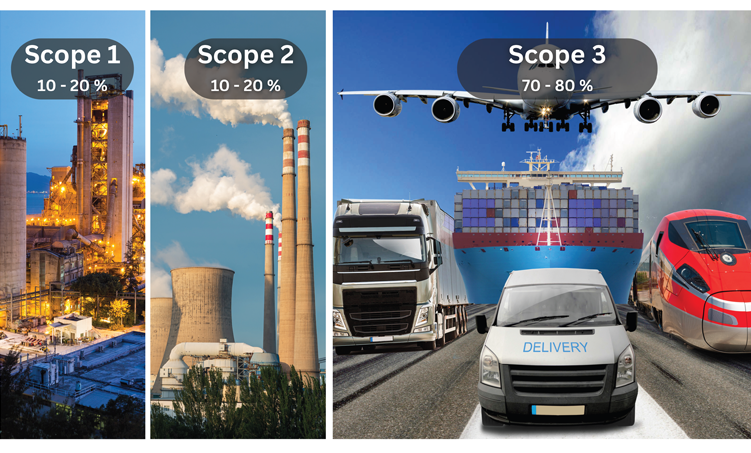
GREENHOUSE GAS (GHG) EMISSIONS MEASUREMENT
Scope 1 Emissions
Measurement of greenhouse gas emissions from sources directly owned or controlled by your organization.
Scope 2 Emissions
Assessment of emissions generated from purchased electricity, steam, heat, and cooling sourced from external providers.
Scope 3 Emissions
Measuring all other indirect emissions that occur in the company’s value chain, both upstream and downstream.
ESG REPORTING
Comprehensive ESG disclosures and reporting conforming to international sustainability reporting standards : GRI & BRSR as per mandatory requirements.
OUR APPROACH

Compliance & Framework Alignment
We ensure your disclosures align with GRI, BRSR, and other recognised sustainability standards, meeting both mandatory and voluntary reporting requirements.

Data Structuring & Validation
Our experts help collect, organise, and validate ESG data to ensure accuracy, completeness, and traceability across all reporting metrics.

Stakeholder Materiality Integration
We incorporate insights from materiality assessments and stakeholder engagement to ensure the report reflects issues most relevant to your business and stakeholders.

Report Design & Development
We create visually appealing, easy-to navigate sustainability reports with clear storytelling, impactful visuals, and data driven insights that highlight your ESG progress and commitments.

Assurance & Continuous Improvement
We guide organisations through third-party assurance processes and annual report enhancement — ensuring continuous alignment with evolving disclosure standards and market expectations.
CIRCULAR
ECONOMY
OUR APPROACH

01
Assess Material Flows and Waste
We begin by analysing material inputs, outputs, and waste streams across operations and supply chains to identify opportunities for reduction, recovery, and circular redesign.

02
Redesign Products and Processes
We support organisations in rethinking product design and manufacturing processes to use fewer virgin materials, improve durability, and enable easier repair, reuse, and recyclability.

03
Establish Internal Reuse and Recycling Loops
We suggest concrete pathways for redesigning the existing systems to recover, repurpose, and reintegrate materials within operations — turning waste into valuable inputs and closing resource loops.

04
Foster Partnerships and Stakeholder Engagement
We collaborate with suppliers, customers, recyclers, and technology partners to create ecosystem-based circular solutions that scale impact beyond organisational boundaries.

05
Educate Employees and Promote Circular Practices
We conduct workshops and training programs to build awareness, encourage behavioural change, and integrate circular thinking into everyday operations.

06
Measure Progress and Communicate Outcomes
We develop KPIs and reporting frameworks to track circular performance, measure impact, and communicate progress transparently to stakeholders.
ESG FOR SMALL
AND
MEDIUM ENTERPRISES (SMEs)
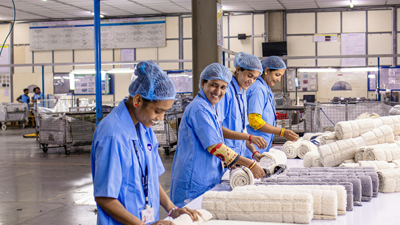
Environmental, Social, and Governance (ESG) principles form the foundation of responsible and resilient business growth.
For Small and Medium Enterprises (SMEs), embracing ESG is no longer optional — it’s a strategic enabler that enhances efficiency, credibility, and long-term sustainability.
Our ESG for SME framework is a compact, practical model that covers all essential aspects of ESG implementation.
Designed specifically for SMEs, it helps organisations integrate sustainability into their business processes with clarity and measurable outcomes.
Our Approach

ESG Readiness Assessment
Evaluate current practices and identify key impact areas for better ESG outcomes.

Strategy Development
Create a practical ESG roadmap aligned with your business goals and industry standards.

Implementation Support
Guiding policy integration, stakeholder engagement, and performance tracking effectively.

Reporting & Disclosure
Assist with ESG metrics, communication, and compliance standards for stakeholders.
Services Offered
ESG Readiness and Gap Assessment
Assess your business practices, resource efficiency, and compliance levels to identify strengths, weaknesses, and opportunities for improvement.
ESG Strategy Development and Roadmap
Co-create a tailored ESG strategy aligned with business objectives, industry requirements, and stakeholder expectations for measurable sustainable growth.
Materiality Assessment
Identify and prioritize ESG issues that matter most to your business and stakeholders for strategic decision-making.
Carbon and Resource Management
Measure, manage, and reduce carbon footprint and resource consumption with energy audits and decarbonization plans.
ESG Data Management and Reporting Tools
Use easy-to-use digital tools to measure, monitor, and report ESG metrics according to recognized frameworks.
Capacity Building and ESG Training
Targeted workshops and training sessions to empower employees and management to understand sustainability objectives.
PATHWAY TO
ZERO WASTE

Waste is one of the most visible indicators of inefficiency in any business operation — and a critical lever for sustainability transformation. Moving toward Zero Waste is not only an environmental commitment but also a pathway to operational excellence, cost savings, and circular value creation.
At Serven Services, we enable organisations to design and implement a Pathway to Zero Waste. Our approach goes beyond simple waste management. We focus on preventing waste at the source, optimizing resource utilization, and embedding circular economy principles that turn waste into opportunity.
Our Approach
Waste Source Assessment
We conduct detailed evaluations to identify sources and types of waste generated across production, packaging, logistics, and end-of-life stages. This assessment helps uncover inefficiencies, resource leakages, and potential opportunities for material recovery.
Waste Reduction, Reuse, and Recycling Strategies
We design tailored strategies for minimizing waste generation and maximizing material recovery. Our experts help you implement closed-loop systems that promote reuse and recycling — turning waste streams into valuable resources.
WATER POSITIVE
MEASURES
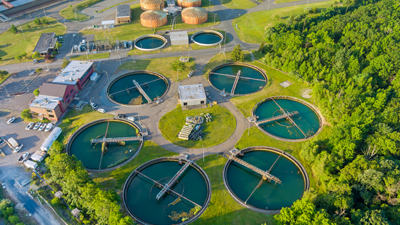
Water is vital to both business and ecosystems. Achieving water positivity means going beyond conservation — actively replenishing and restoring water resources so your organisation gives back more than it consumes.
At Serven Services, we help organisations implement Water Positive Measures that enhance operational efficiency, reduce water risks, and create shared value for communities and the environment.
Our Water Positive Framework

Water Source & Risk Assessment
Comprehensive mapping of water use and risks across operations and supply chains, identifying key areas for reduction, reuse, and replenishment.

Efficiency & Demand Reduction
Process optimisation, leak detection, and water-efficient systems to minimise withdrawals and lower operating costs, and wetland restoration to offset water use and strengthen local resilience.

Reuse, Recycling & Treatment
Design and implementation of on-site systems for greywater reuse, industrial recycling, and fit-for-purpose treatment to conserve freshwater.

Replenish & Restore
Catchment-level initiatives such as groundwater recharge, rainwater harvesting, and wetland restoration to offset water use and strengthen local resilience.

Nature-Based Solutions
Use of green infrastructure and reforestation to improve infiltration, enhance water quality, and provide biodiversity and climate co-benefits.

Stakeholder Engagement
Collaboration with communities, authorities, and NGOs to drive collective water stewardship and equitable access.

Digital Monitoring & Controls
Smart metering and real-time monitoring systems for accurate measurement, leak detection, and performance tracking.

Measurement & Reporting
Verification and disclosure of progress using recognised frameworks such as AWS, CDP, and CSRD for credible water positive claims.

Financing & Business Case Development
Structuring investments and partnerships to make water projects financially viable and aligned with sustainability goals.

Capacity Building & Policy Alignment
Training teams and suppliers, and embedding water stewardship into corporate policies and procurement practices.
OTHER ADVISORY
SERVICES

Our ESG consulting company offers comprehensive advisory and implementation support to organizations committed to embedding ESG principles, particularly in the domains of renewable energy, energy efficiency, ESG data, and technology adoption.
Services Offered

Energy Efficiency Optimisation
We identify and source proven technologies, equipment, methodologies, and tools for improving energy efficiency and cost optimisations.

Renewable Energy and Clean Energy Advisory
We provide end-to-end guidance on adopting renewable energy solutions such as solar, wind, and clean energy tailored to your operational needs. This includes feasibility analysis, technology selection, vendor identification, and roadmap creation for transitioning toward clean energy.

Financing Advisory for Sustainability Initiatives
We support companies in identifying funding sources including green bonds, grants, and ESG-linked loans. Our services encompass proposal preparation, cost-benefit analysis, and investment readiness to leverage financial incentives for sustainability projects.

Carbon Market and Offset Integration
Guide clients in navigating carbon markets, including purchasing or selling carbon credits and offsets to achieve net-zero goals. Develop strategies for integrating carbon sustainability finance portfolios into broader frameworks, ensuring high-quality, verified offsets.

ESG Data Management and Software Implementation
Guidance on selecting cost-effective ESG software and data management tools that automate data capture, analysis, and reporting. We evaluate vendors to match technology with business scale and sector needs, ensuring seamless integration with existing systems.

Technology Collaboration and System Integration
Facilitating partnerships with technology providers and integrating disparate sustainability systems to create unified reporting and management platforms. This improves data accuracy, decision-making speed, and stakeholder transparency.
ESG FOR SUPPLY
CHAIN

Supply chains are the backbone of every business — and increasingly, the source of most environmental and social impact. Building sustainable, ethical, and transparent supply chains is no longer a compliance task; it’s a strategic business imperative.
Supply Chain ESG assessments are mandated by major enterprises as part of Scope 3 carbon emission measurement and responsible procurement practices. Supply chain emissions alone contribute 70–75% of total enterprise emissions, making these assessments essential.
We promote voluntary ESG assessment for supply chain enterprises ahead of mandatory requirements, offering advantages like cost efficiency, value creation, and timely legal compliance.
Our Methodology

Supply Chain ESG Assessment
Evaluate environmental, social, and governance risks across your supplier network and identify priority focus areas.

Responsible Sourcing Frameworks
Design and embed policies, codes of conduct, and due diligence systems aligned with global ESG standards.

Supplier Engagement & Capacity Building
Enable suppliers to understand expectations, improve performance, and adopt sustainable practices through structured engagement programs.

ESG Data & Reporting
Develop systems for supplier ESG data collection, analysis, and disclosure in line with recognized frameworks such as BRSR, GRI, etc.
Services We Offer

ESG Readiness & Gap Assessment
Assess current operational practices, compliance levels, and environmental and social impacts to identify key improvement areas aligned with industry standards.

Supplier ESG Strategy & Roadmap
Develop a tailored ESG plan suited to your company’s size and industry, focusing on achievable goals that balance profitability with sustainability.

Policy Formulation & Documentation
Create essential ESG policies — including environmental management, worker welfare, ethical sourcing, waste reduction, and DEI practices.

ESG Data Management & Reporting Tools
Implement easy-to-use templates and digital systems to track emissions, waste, resource usage, and labor practices for transparent reporting.

Capacity Building & Workforce Training
Conduct workshops and training programs to build ESG literacy among employees and management for adoption across all levels.

Supplier Certification & Client Alignment
Assist in achieving third-party ESG certifications and aligning supplier profiles with client sustainability requirements, improving visibility in procurement networks.

Continuous Monitoring & Performance Review
Track performance, conduct periodic audits, and implement improvement plans for ongoing compliance and measurable results.

ESG Branding & Communication Support
Help suppliers showcase their sustainability journey through ESG reports, client presentations, and marketing communication — strengthening brand perception.
SUSTAINABLE
FINANCING

Sustainable financing integrates environmental, social, and governance (ESG) factors into financial decision-making to support long-term economic growth while minimizing negative impacts on society and the environment.
It channels capital toward initiatives that promote climate resilience, resource efficiency, and social equity—aligned with global frameworks such as the UN Sustainable Development Goals (SDGs) and the Paris Agreement.
Unlike traditional finance focused on short-term returns, sustainable finance prioritizes risk-adjusted outcomes that balance profitability with measurable environmental and social impact.
Services Offered
Green & Sustainability-Linked Financing

Structuring green bonds, sustainability-linked loans, and social bonds while identifying optimal funding institutions. We support financing for eligible projects such as renewable energy, clean technology, and affordable housing.
Carbon Market & Offset Integration

Advisory support for navigating carbon markets, including buying and selling verified carbon credits. We help integrate carbon finance into sustainability strategies to support net-zero goals.
ESG IMPACTS
THROUGH CSR
CSR that meets the law and changes something on the ground.
We help companies design their CSR policy, choose high-impact environmental and social projects, run them through vetted non-profit partners, and report results with verifiable evidence. No in-house CSR team needed.
2%
of average net profit of the last three financial years must go to Schedule
VII activities.
CSR is a compliance duty before it is a good deed
Under Section 135 of the Companies Act, 2013, companies crossing legal thresholds must spend on CSR, form a board committee, adopt a policy, and disclose results.
Who must comply
Any one of these in the preceding financial year- Net worth of ₹500 crore or more
- Turnover of ₹1,000 crore or more
- Net profit of ₹5 crore or more
What must be spent
Statutory minimum- At least 2% of average net profit of the preceding three financial years
- Spent only on activities listed in Schedule VII
What must be shown
Filings and governance proof- Board-approved CSR Policy and Annual Action Plan
- Board Report disclosures and Form CSR-2 filing
- Independent Impact Assessment, where applicable
Less than 7% of CSR money goes to the environment
Spending clusters around education and healthcare because their results are easy to count. Environment and climate action get the smallest share of national CSR capital.
Putting CSR funds into verifiable environmental projects meets Section 135 and also advances Scope 3 decarbonisation, water positivity and BRSR disclosures.
The Serven advantage: we design projects that
pair ecological
restoration with rural livelihoods, so your Board gets hard impact data (litres
of water recharged,
tonnes of CO₂e sequestered) alongside compliance.
One advisory partner for the full CSR cycle
From the first policy draft to the final impact report, we handle governance, execution and verification.
CSR compliance and policy
- Applicability check and budget computation
- CSR policy drafting with defined focus areas
- Committee setup, charters and meeting templates
- Annual action plan and board report disclosures
- Unspent CSR and ongoing-project compliance
Project identification and design
- Needs mapping around plants, sites and communities
- Screening against Schedule VII and focus areas
- Project design with budget, timeline and outcomes
- Environment-first project pipeline
Partner network and execution
- Tie-ups with credible non-profit implementing agencies
- Due diligence: CSR-1, 12A/80G, track record
- MoUs with deliverables, milestones and fund release terms
- Project management until closure
Monitoring, impact and reporting
- Baseline surveys and a results framework per project
- Field visits, utilisation checks and progress dashboards
- Independent impact assessment where required
- Annual CSR report and stakeholder-ready case studies
Engagement and capacity building
- Executive and board workshops on CSR law and strategy
- Training for CSR committee members and teams
- Employee volunteering and community engagement
- Site visits connecting teams with project outcomes
ESG alignment
- Link CSR projects to corporate ESG goals
- Map outcomes to the UN Sustainable Development Goals
- BRSR inputs on CSR spend
- Science-based impact verification for disclosures
Environment-focused projects
Our ESG specialisation steers CSR budgets toward initiatives whose ecological and community results can be counted, verified and sustained.
Water body restoration
Desilting, bund strengthening, catchment treatment and community water governance for lakes, ponds and tanks.
Litres of storage added, groundwater recharge levels
Carbon sequestration
Native-species afforestation, agroforestry, mangrove or wetland restoration with multi-year survival monitoring.
Trees surviving (%), tonnes CO₂e sequestered
Watershed and soil health
Check dams, contour work and soil bio-engineering for agricultural communities.
Hectares under improved irrigation, yield gains
Biodiversity and habitat
Miyawaki-style urban forests, pollinator habitats and native wildlife corridors.
Native species count, square metres restored
Clean energy and waste
Solar power for community institutions, clean cooking, decentralised waste segregation and recycling.
kWh solar generated, tonnes waste diverted
We specialise in environmental projects, but we also design and manage projects in education, healthcare, skilling and livelihoods to match your CSR policy.
Our six-stage methodology
Compliance, field execution and impact reporting stay in one clear line of sight.
-
Assess legal standing and baseline
Review legal applicability, past CSR spend, key stakeholders, operating geography and ESG priorities.
CSR Readiness Note and Budget -
Set the governance framework
Draft the CSR policy, focus areas, governance structure and annual action plan for Committee and Board approval.
Board-Ready Policy and Action Plan -
Identify and design projects
Shortlist projects with a scoring model: legal fit, community need, outcome metrics, durability and cost-efficiency.
Project Proposals and Budgets -
Select partners and contract
Match projects with vetted non-profit partners, run due diligence, sign MoUs and manage milestone disbursements.
Due Diligence Reports and MoUs -
Monitor and measure field progress
Track outputs through site visits and financial audit checks, and measure outcomes against baseline data.
Progress and Utilisation Reports -
Report, disclose and scale
Prepare statutory disclosures, the annual CSR report and case studies, then review each year to improve.
Compliance Filings and Case Studies
Non-profit partner network and due diligence
Serven Services is your central advisory and monitoring authority. Screened, legally compliant non-profit partners carry out the on-ground work.
Swastha
Education and youth developmentAdvances educational access, digital literacy hubs, school infrastructure and foundational learning for under-served communities.
STEM labs, digital classrooms, skill hubsExnora International
Environment and waste managementA civic environmental movement working on eco-restoration, decentralised zero-waste campuses, lake and pond rejuvenation and community-led protection.
Zero-waste systems, lake rejuvenation, civic ecologyIndia Vetiver Foundation
Agriculture and bio-engineeringHelps farmers and institutions build ecosystems around Vetiver: slope stabilisation, riverbank erosion control, wastewater phytoremediation and handicraft livelihoods.
Bio-engineering, soil protection, farmer livelihoodsOur 4-point NGO screening protocol
Legal standing
Valid MCA CSR-1 registration, 12A/80G status, clean tax filings and legal incorporation.
Proven track record
Past performance, verifiable references and field presence in the project geography.
Financial health
Audited accounts, board oversight, transparent fund use and financial controls.
Reporting quality
Raw data, geo-tagged field photos, milestone tracking and third-party audit access.
Training and engagement programmes
Capacity building that leaves your leadership and teams confident long after the engagement ends.
For leaders and boards
- Duties of Directors and CSR Committee obligations under Section 135
- Aligning CSR investments with corporate ESG goals
- Reading third-party impact reports and judging project durability
For managers and employees
- Project monitoring, documentation standards and reporting basics
- Volunteering days: afforestation, lake clean-ups, school visits
- Workshops on sustainability, circular economy and community stewardship
What your organisation gets
Confident compliance
Policy, spend, disclosures and Form CSR-2 filings handled to current requirements, reducing legal exposure and penalties.
Impact you can prove
Baselines, KPIs and independent verification turn spend into audited, board-ready outcomes.
Budget efficiency
Projects chosen for outcome per rupee, with funds released only against verified field milestones.
A stronger ESG narrative
Environmental projects feed BRSR disclosures, decarbonisation goals and investor communications.
Zero internal overhead
One accountable partner replaces a costly in-house CSR department and NGO network.
Engaged stakeholders
Employees and board members understand, join in and take pride in community investments.
Frequently asked questions
Our CSR budget is small. Is advisory worth it?
Yes. Smaller budgets gain the most from careful project selection and a reliable partner. We offer scoped engagements, from a one-time policy and action plan setup to full project monitoring.
Do you implement projects yourselves?
No. Qualified non-profit partners such as Swastha, Exnora and India Vetiver Foundation execute on the ground. Serven Services acts as your independent advisor: selecting, contracting, monitoring and auditing the work.
Can you help with unspent CSR funds?
Yes. We review ongoing and unspent CSR amounts and ensure they move into designated Schedule VII funds or ongoing multi-year project accounts within the legal timelines.
Is impact assessment mandatory for our projects?
It is mandatory for companies with an average CSR obligation of ₹10 crore or more, and for projects with budgets of ₹1 crore or more. We confirm whether it applies to you and recommend simple outcome measurement even where it is not required.
Can CSR projects count toward our ESG reporting?
Yes. We structure project indicators and measurement frameworks so environmental and social outcomes feed directly into your BRSR and ESG disclosures.
Start with a CSR Readiness Review
A short consultation to confirm your legal obligations, assess where you stand, and outline a tailored CSR action plan for the year ahead.
Book a readiness review- AddressServen Services Pvt Ltd, S23, 3rd floor, Vatika, Prestige Polygon, Anna Salai, Nandanam, Chennai, TN 600035
- Phone+91 98840 43036
- Emailreach@servenservices.com
Extended Producer Responsibility (EPR) Compliance
Extended Producer Responsibility: your trusted partner
Waste streams we cover
- Plastic waste management
- E-waste management
- Battery waste management
What is EPR?
Extended Producer Responsibility (EPR) makes manufacturers, importers and brand owners accountable for the full lifecycle of what they put on the market, especially take-back, recycling and disposal once a consumer is done with it. The cost and effort of managing waste shifts back to the businesses that create it, not municipalities and the environment.
EPR is not limited to one industry. It spans plastic packaging, e-waste and battery waste, each under its own rules. You can approach Serven Services for e-waste and battery waste guidance as well as our plastic packaging expertise.
The legal foundation
Every one of these rules flows from one umbrella law: the Environment (Protection) Act, 1986. Sections 6, 8 and 25 empower the Central Government to frame rules for hazardous substances and environmental protection.
Under that authority, MoEFCC has notified the plastic, e-waste and battery EPR rules separately. Different waste streams, one parent law.
Why EPR exists. It applies the Polluter Pays
Principle: whoever places a product on the market answers for it after use. The
wider goal is a circular economy that keeps materials in use longer, eases pressure
on landfills, and brings the informal recycling sector under oversight, safety
standards and fair pay.
How EPR in India evolved
Built in stages over more than a decade, each phase widening scope and tightening enforcement.
2011–12
E-Waste (Management & Handling) Rules notified, India's first EPR obligations, for electronics.
2016
Plastic Waste Management Rules notified, bringing plastic packaging under EPR for the first time.
2022
Major expansion: plastic EPR restructured under Schedule II with the PIBO/SIMP framework, E-Waste Rules 2022 replaced the 2016 rules, and Battery Waste Rules arrived. All moved to a central CPCB portal.
Today
Fully operational. Registration, target filing and EPR certificate trading all run digitally on CPCB portals.
Plastic waste
Every business touching plastic packaging falls into one of three roles. The obligation, and how it is met, depends on which one applies.
SIMP
Raw material side- Seller of plastic (raw material)
- Importer of plastic (raw material)
- Manufacturer of plastic (raw material)
- Producer (micro/small)
PIBO
Finished-goods side- Producer (medium/large)
- Importer (finished material)
- Brand Owner
PWP
End-of-life side- Plastic Waste Processors
- Registered recyclers
- Must register with both SPCB/PCC and the CPCB portal
Packaging categories I to IV
Every recycling target, credit and portal declaration is filed at category level, so correct classification is the foundation of compliance.
Category I: Rigid
Sub-divided by capacity and highly recyclable. Containers over 0.9 L/kg carry a reuse mandate.
Bottles, caps, drums, containers
Category II: Flexible
Single-layer or multilayer using the same polymer type.
Pouches, sachets, shrink wrap, carry bags
Category III: Multilayered (MLP)
Plastic combined with a non-plastic layer. Hardest to recycle, with the highest EC exposure.
Tetra-pack style milk and juice cartons
Category IV: Compostable
Exempt from the 120-micron rule, but must meet IS/ISO 17088:2021 with an industrial-composting label.
Compostable carry bags and commodities
E-waste
The E-Waste (Management) Rules, 2022 widened coverage from 21 to 106 types of electrical and electronic equipment (EEE), grouped into seven categories in Schedule I. Every registration and recycling target is tied to these categories.
- IT and telecommunication equipmentComputers, laptops, printers, phones, networking gear.
- Consumer electrical, electronics and photovoltaic panelsTVs, refrigerators, ACs, washing machines, solar panels.
- Large and small electrical and electronic equipmentBigger appliances alongside smaller household electronics.
- Electrical and electronic toolsPower tools and equipment, excluding large stationary industrial tools.
- Toys, leisure and sports equipmentElectronic toys, gaming consoles, sports gear with electronic parts.
- Medical devicesDiagnostic and treatment equipment, excluding implanted or infected products.
- Laboratory instrumentsTesting and measurement equipment used in laboratories.
Who is obligated
Manufacturers
Entities that manufacture EEE, for their own brand or for others.
Producers
Manufacturers, importers or brand owners who place EEE on the market and carry the core EPR obligation.
Refurbishers
Entities that recondition used EEE for further use, registering on the portal and meeting applicable standards.
Recyclers
Registered entities that process e-waste to recover materials and help producers meet recycling targets.
Other waste streams, coming soon
Battery wasteWaste tyresUsed oilEnd-of-life vehiclesNon-ferrous metal scrapOur EPR services
From first registration to ongoing portal management.
Training
Awareness and practical skills for effective plastic waste segregation and management.
Registration
Help obtaining the registrations required under the PWM Rules.
Compliance advisory
Expert guidance for ongoing compliance with EPR and plastic waste regulations.
Renewal, filing and portal management
Timely renewals, regulatory filings and online portal submissions.
Documentation and reporting
All required compliance documents, records and statutory reports, prepared and maintained.
Data mapping and risk assessment
Plastic waste data analysed to find compliance risks before they become penalties.
Credit offsetting
Procuring the EPR credits you need to meet recycling and end-of-life obligations.
How we work with you
Pick the path that matches where you are today.
New or unregistered organisations
- Analyse and categorise. We study your requirements and decide whether you are a SIMP, PIBO or PWP.
- Registration. We handle the complete EPR registration process.
- Establish obligation. Once registered, we set the exact obligation you must fulfil.
- Procure EPR credits. We source the credits needed to meet that obligation.
- Parallel support. We train your employees and manage filings, renewals and portal activity.
- Data mapping and risk assessment throughout the engagement.
Already registered organisations
- Credit offsetting. We procure the EPR credits needed for your existing obligations.
- Ongoing support. Renewals, filings and portal management, handled continuously.
- Documentation and reporting. Records and annual data reporting.
- Data mapping and risk assessment across the engagement.
Why choose Serven Services for EPR
EPR compliance has become data-heavy and scrutiny-driven.
Most businesses experience it as fragmented: advice in one place, data collection in another, credit procurement handled separately, portal filings done under pressure. The result is incomplete records, classification errors and avoidable notices and penalties.
We combine hands-on regulatory execution with circular economy and ESG expertise. That lets us go beyond one-time filings and help you build compliance systems that are accurate, auditable and aligned with your longer-term sustainability goals.
- Risk-first thinkingWe find compliance exposure early and structure the engagement to reduce it.
- Data disciplineQuantities, classifications and credits are validated so every declaration is defensible.
- Execution depthWe stay involved through registration, filings, credit planning and portal management.
We measure success by the strength of the compliance system we help you build, one that can withstand CPCB scrutiny and adapt as the rules evolve, not by the number of filings completed.
What happens if you don't comply
EPR is not optional, and the consequences go well beyond an invoice.
Financial
Reporting penalties
Fines for late filing, incorrect information or falsified data on the CPCB portal.
Operational
Registration sanctions
Your EPR registration can be suspended or cancelled, halting your ability to operate legally.
Legal
Legal penalties
Unpaid fines can mean imprisonment of up to 3 years and/or double the original fine under the Environment (Protection) Act, 1986.
Reputational
Reputation risk
Public shaming, adverse press coverage and loss of customer and partner trust.
Need help understanding your EPR obligations?
Get a custom proposal. Let us guide you.
Responsible & Green Supply Chain
Buy better. Source responsibly. Build a supply chain your buyers can trust.
Serven Services helps manufacturers move from ad-hoc, compliance-only purchasing to a structured, measurable Responsible & Green Procurement programme, and stays with you from the first assessment to day-to-day implementation.
Aligned with :
ISO 20400OECD Due Diligence GuidanceUN Guiding
PrinciplesResponsible Business Alliance (RBA)Indian
labour & environmental lawCII GreenCo / GreenPro
Two terms, often confused. One is wider than the other.
Procurement decisions shape your costs, your risks and your reputation. Here is how we think about them.
Responsible Sourcing
Builds social, environmental, ethical and governance considerations into purchasing and supply-chain decisions, alongside cost, quality and delivery. It covers how suppliers treat workers, manage the environment and conduct business, and how you choose, monitor and support them.
Green Sourcing
The environmental part. It looks at what you buy and how it is made, moved and packed: carbon, energy, water, waste, packaging, hazardous materials and circularity.
Green Sourcing is an important part of Responsible Sourcing, but Responsible Sourcing is wider. A programme that looks only at the environment can still leave serious labour, ethics and governance gaps in your supply chain.
If a buyer, auditor or regulator asked tomorrow how
responsibly you make sourcing decisions, could you answer with evidence?
Responsible procurement is moving from "nice to have" to "expected"
Whatever your sector or size, five forces are pushing procurement practice forward.
Regulatory momentum
Expectations on environmental performance, labour practice and sustainability disclosure are rising in India and your export markets. Documented, systematic practice keeps you ahead.
Buyer and export pressure
Buyers increasingly ask suppliers for codes of conduct, audit readiness and evidence. Responding well protects current business and opens new doors.
Cost and operational resilience
Better-informed sourcing exposes energy, water, material and packaging inefficiencies, and reduces dependence on fragile single-point suppliers.
Risk reduction
A supplier's labour, safety, environmental or ethics failure becomes your problem. Structured due diligence catches issues before they become disruption or headlines.
Talent, community and capital
Employees, communities, lenders and investors notice how companies behave. Credible practice supports your reputation and access to talent and funding.
The question is no longer whether to act, but how to do it in a way that is practical for your business.
We own the whole journey, not just the report
Many programmes end with a document or a toolkit and a handshake. We take responsibility for the complete engagement, so what is recommended actually gets done.
- Assessment and baselineWe establish where your procurement and supplier practices stand today.
- Gap analysisWe compare practice with recognised frameworks and pinpoint what is missing or at risk.
- Roadmap and solutionsWe turn gaps into a sequenced plan your teams can realistically deliver.
- TrainingWe equip procurement, operations and sustainability teams to run the programme themselves.
- Implementation supportWe work alongside you as it goes live, and help you measure, review and improve.
One partner. One continuous engagement. No hand-off gap between
advice and action.
A clear path from where you are to where buyers expect you to be
Our Common Protocol works for any manufacturer. You do not need a perfect data set to begin: where information is limited, we help you build the baseline as part of the process.
-
Scope and align
We agree objectives, boundaries and stakeholders.
You receiveA shared scope and engagement plan -
Baseline self-assessment
Your teams complete structured tools covering policy, practice and supplier management.
You receiveA clear picture of your starting point -
Site and supplier diagnostics
We review facilities, processes and key supplier relationships.
You receiveEvidence-based findings, not assumptions -
Materiality and risk mapping
We identify the social, environmental and ethical issues that matter most in your supply chain.
You receiveA prioritised view of risk and opportunity -
Gap analysis and KPI framework
We compare practice with global and Indian expectations and define how progress will be measured.
You receiveA gap register and a KPI set -
Roadmap and solutions
We design the policy, supplier requirements and practical measures to close priority gaps.
You receiveA 12 to 24 month roadmap with recommended solutions -
Train, implement and improve
We build capability, support rollout and set up review cycles.
You receiveTrained teams, working processes and a governance rhythm
What you actually receive
Practical tools and documents your teams can use from day one.
Self-assessment tools
Structured questionnaires to benchmark current practice.
Site diagnostics
On-the-ground review of facilities and processes.
Materiality mapping
A clear view of which sourcing issues matter most to your business.
KPI framework
Measurable indicators to track progress and show results to buyers.
Supplier Code of Conduct
A clear, fair statement of what you expect from suppliers.
12 to 24 month roadmap
A sequenced plan with priorities, owners and milestones.
Logistics and technology recommendations
Practical options to lower emissions, waste and cost in how goods move and are tracked.
Training modules
Role-based learning for procurement, operations, sustainability and leadership.
Governance set-up
Roles, review cycles and reporting so the programme sustains itself.
Built for manufacturers of every size and sector
Our approach is common across industries and adapts to your context.
Textile and
apparelPharmaceuticalChemicalEngineeringFood
and beverageOther industrial sectors
We work with procurement, operations, sustainability and leadership teams.
It is especially relevant if you
- Buy on cost, quality and delivery alone, or handle responsible sourcing ad hoc
- Meet compliance requirements but have no systematic way of going further
- Are asked by buyers or auditors for evidence you cannot yet provide quickly
- Want a measurable, buyer-ready Responsible & Green Procurement programme, not a one-off exercise
Practical sustainability, delivered end to end
We believe sustainability matters, and that it works best when it is practical.
Practical and scalable
ESG and supply-chain solutions that work for Indian manufacturers, including small and mid-sized businesses, not frameworks only large enterprises can sustain.
End-to-end delivery
We do more than advise. We stay through training and implementation, so progress shows up in your operations, not only in a report.
Global frameworks, Indian reality
We ground our work in international standards and translate them into what Indian regulations, buyers and shop-floor conditions actually require.
Measurable outcomes, built-in capability
We define clear KPIs from the start and train your people, so the programme belongs to your team, not to us.
Connected expertise. This service draws on our
work in Sustainability and ESG, Decarbonisation, Circular Economy and Supply Chain
ESG assessments, so you get joined-up support rather than isolated advice.
What you can expect
A clear policy foundation
For responsible and green procurement.
Prioritised gaps
Identified across your sourcing and supplier practices.
Measurable KPI movement
Progress you can track and report.
Supplier alignment
Through a shared code of conduct and clear expectations.
Audit and certification readiness
Prepared for buyer audits and certifications.
Stronger governance and capability
So you keep improving after the engagement.
Ready to look honestly at how you source?
Are your current practices really enough for what your buyers, regulators and your own people now expect?
A discovery conversation is a relaxed, no-pressure first step. We listen to where you are, share how we would approach it, and help you decide what makes sense next.